
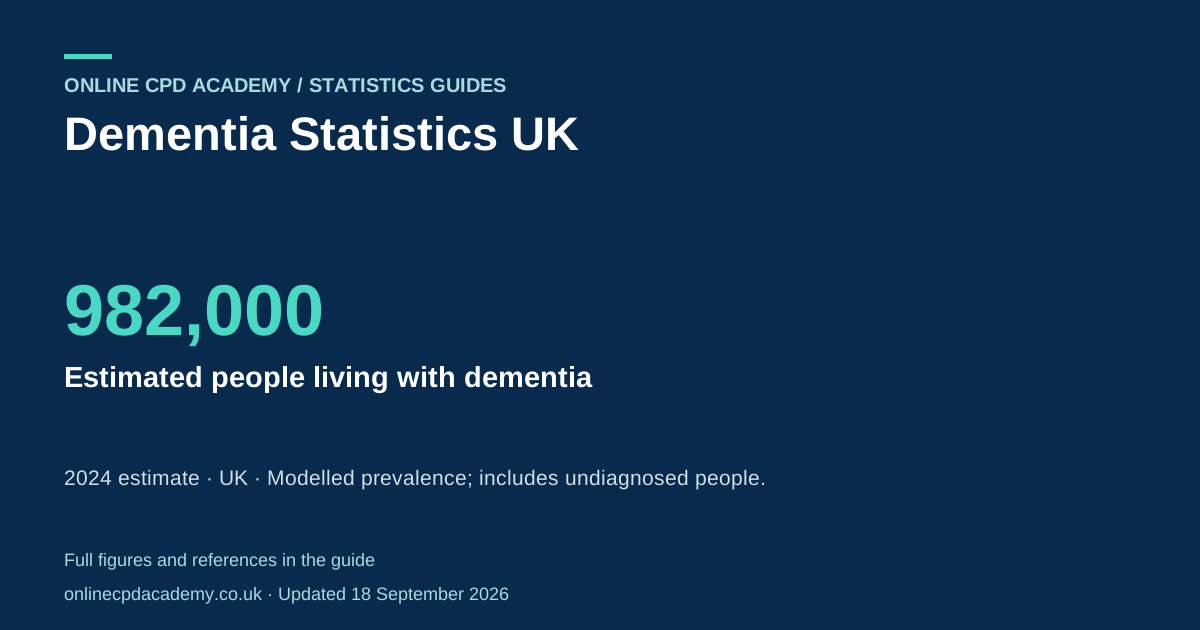
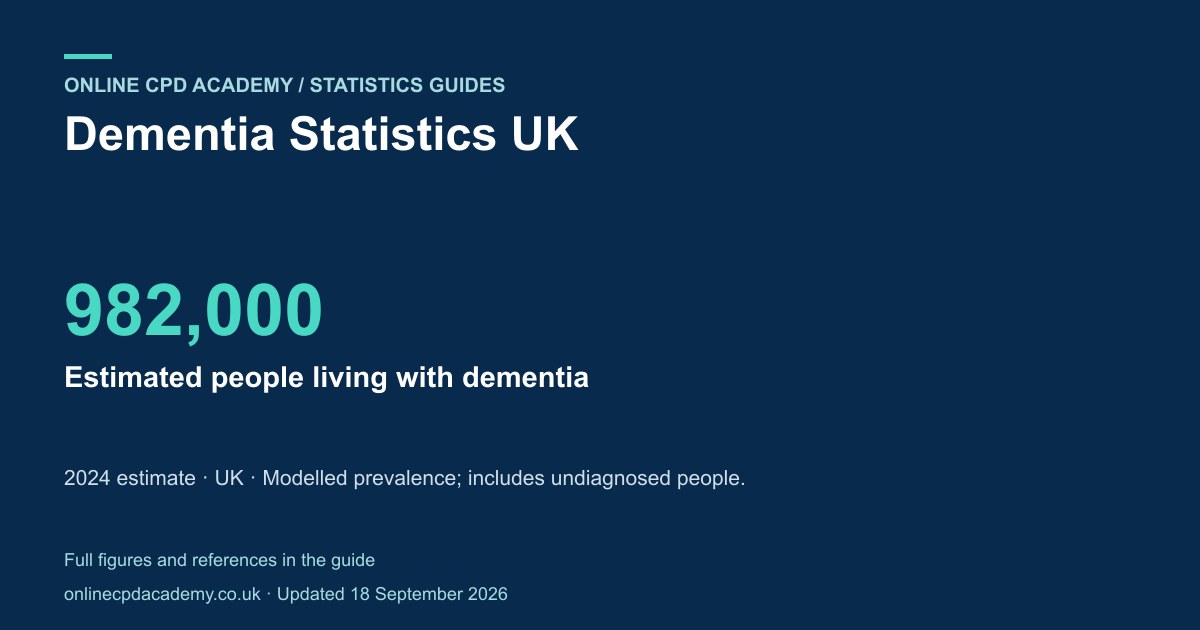
An estimated 982,000 people were living with dementia in the UK in 2024, with the total projected to reach around 1.4 million by 2040. England recorded 516,230 diagnosed cases in June 2026. The figures below bring together prevalence, diagnosis, mortality and care costs.
Key statistics at a glance
| Statistic | Figure | Period and coverage |
|---|---|---|
| Estimated people living with dementia | 982,000Modelled prevalence; includes undiagnosed people. | 2024 estimate UK |
| Recorded dementia diagnoses | 516,230All ages; GP records. | 30 June 2026 England |
| Diagnosis rate among people aged 65+ | 66.2%Recorded diagnoses divided by estimated prevalence. | 30 June 2026 England |
| People whose diagnosis was made before 65 | 34,7836.7% of people on the dementia register; not their current age. | 30 June 2026 England |
| Deaths with dementia and Alzheimer's disease as underlying cause | 72,27212.7% of registered deaths; excludes Scotland and Northern Ireland. | 2025 registrations England and Wales |
| Estimated annual economic cost | £42.5 billionSocietal model, not NHS spending alone. | 2024 model; 2024 prices UK |
Prevalence and cost estimates cover the UK in 2024. Diagnosis figures cover England in June 2026; the latest mortality figures cover England and Wales in 2025.
How many people in the UK have dementia?
The Alzheimer’s Society-commissioned Carnall Farrar model estimates 982,000 people living with dementia in 2024. This includes people with and without a formal diagnosis. Its projection of around 1.4 million by 2040 reflects expected population and prevalence changes.
The NHS estimates that around one in 11 people aged over 65 has dementia. Dementia describes a syndrome caused by several diseases affecting the brain. Alzheimer’s disease is the most common cause, accounting for an estimated 60–70% of cases worldwide.
Dementia diagnoses and the diagnosis gap
England’s GP records contained 516,230 dementia diagnoses on 30 June 2026. Among people aged 65 and over, the recorded diagnosis rate was 66.2% of estimated prevalence. The remaining 33.8% represents the estimated diagnosis gap for that age group.
The register included 34,783 people diagnosed before age 65, or 6.7% of recorded cases. This measure follows age at diagnosis, so it includes people who have since turned 65.
Dementia deaths in the UK
Dementia and Alzheimer’s disease were the underlying cause of 72,272 deaths registered in England and Wales in 2025. That was 12.7% of all registered deaths and the leading cause in the ONS cause-of-death grouping.
For the whole UK, Alzheimer’s Research UK reported 76,894 deaths in 2024, compared with 75,393 in 2023. The 2024 total comprised 48,915 women and 27,979 men. This UK series and the newer England-and-Wales series have different geographic coverage; their totals describe separate populations.
How much does dementia cost the UK?
The 2024 model estimates an annual economic cost of £42.5 billion, with approximately 63% borne by people with dementia and their families. The projected total for 2040 is £90.3 billion in 2024 prices.
The model values healthcare at £7.1 billion, social care at £17.2 billion and unpaid care at £21.1 billion. Its final total also incorporates quality-of-life costs and an economic-consumption offset. Unpaid care represents the estimated value of carers’ work, rather than payments made to them.
What the figures measure
Prevalence estimates include undiagnosed dementia; GP registers count recorded diagnoses. Death statistics identify an underlying cause, and registration can happen after the year of death. Cost projections use modelling assumptions and a stated price year.
These distinctions explain why the statistics answer different questions. A diagnosis can help people understand symptoms, plan care and access tailored support. Persistent memory or thinking problems should be discussed with a healthcare professional.
Frequently asked questions
How many people in the UK have dementia?
The 2024 prevalence model estimates 982,000 people, including those without a formal diagnosis. It projects approximately 1.4 million by 2040.
What is the dementia diagnosis rate in England?
The recorded diagnosis rate was 66.2% among people aged 65 and over in June 2026, measured against estimated prevalence.
How much does dementia cost each year?
The 2024 UK model estimates £42.5 billion in annual economic costs, with approximately 63% borne by people with dementia and their families.
Using these statistics?
Please credit Online CPD Academy and link to this guide when using these statistics in an article, report or website.
Suggested citation: Online CPD Academy, Dementia Statistics UK: Prevalence, Diagnosis and Costs (2026), updated 18 September 2026.
Sources
- Alzheimer’s Society / Carnall Farrar — The economic impact of dementia, Module 1
- NHS England — Primary Care Dementia Data, June 2026
- ONS — Death registration summary statistics, England and Wales: 2025
- Alzheimer’s Research UK — Dementia is still UK’s biggest killer
- WHO — Dementia factsheet
- NHS — What is dementia?
From food hygiene and fire safety to first aid, mental health and more, we offer a wide range of accredited, online courses you can start today.
Browse all 22 accredited courses →
Mark writes about health, care and workplace safety, compliance and accredited online training for Online CPD Academy.