
RoSPA approved
Working at Height Course
Risk assessment, legislation and the safe use of access equipment under the Work at Height Regulations 2005 — the wider picture beyond ladders.
£14.00

A RoSPA accredited online Ladder Safety Training course for all UK workplaces — covering ladder selection, pre-use inspection, safe positioning and use of ladders and stepladders, the 1-in-4 rule, three points of contact and your duties under the Work at Height Regulations 2005, to help prevent falls from height.



The Online Ladder Safety Training Course is designed to give employees and employers a clear, practical understanding of how to use ladders and stepladders safely in the workplace. Falls from height remain one of the leading causes of serious workplace injuries and fatalities in the UK, and ladders are involved in a significant proportion of these incidents.
Suitable for all UK workplaces — including construction sites, warehouses, offices, retail, facilities management, maintenance, and domestic settings — this course covers ladder selection, inspection, safe positioning, correct use, and the legal framework under the Work at Height Regulations 2005 and the Health and Safety at Work etc. Act 1974.
The course is delivered fully online, allowing learners to complete training at their own pace. Upon successful completion, learners receive an instant downloadable Ladder Safety Certificate, providing evidence of training for employers and compliance records.
This ladder safety training is developed in line with UK health and safety legislation and current HSE guidance on safe use of ladders and working at height. There are no formal entry requirements, and no prior training is needed.
By the end of this ladder safety training you'll be able to:
This course walks you through real workplace scenarios — choosing the right ladder, carrying out a pre-use inspection, setting up at the correct angle with the 1-in-4 rule and keeping three points of contact — so you can use ladders and stepladders safely and stay compliant with the Work at Height Regulations 2005.
It’s all online and self-paced, with short, easy-to-follow modules you can complete on any device in around 30 minutes.
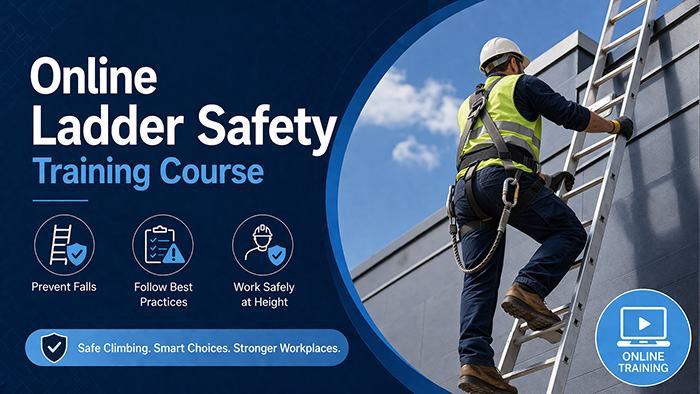
This ladder safety training is delivered through 13 structured modules with clear explanations, practical examples and defined learning outcomes, ending with a final assessment:
This opening module sets the scene for the course, explaining why ladders remain one of the most commonly used pieces of access equipment in UK workplaces and homes, and why so many incidents involve them. You'll learn what the training covers, who it's aimed at and the core principles of using ladders responsibly, building a solid foundation for the more detailed guidance that follows.
Falls from height are a leading cause of serious workplace injury, and ladders feature in many of them. This module examines the common causes of ladder-related falls, such as overreaching, poor positioning and using damaged equipment, and looks at the human and organisational consequences. Understanding how falls happen is the first step towards preventing them.
Here you'll explore the Work at Height Regulations 2005, the key piece of UK legislation governing any work where a fall could cause injury. The module breaks down the regulations in plain language, including the requirement to avoid working at height where possible and to properly plan, supervise and carry out the work, helping you understand your legal duties when using ladders.
A ladder is not always the right tool for the job. This module helps you make sensible risk-based decisions about when a ladder is suitable, typically short-duration, low-risk tasks, and when alternative access equipment such as a tower or platform would be safer. Knowing when not to use a ladder is just as important as knowing how to use one correctly.
This module introduces the main types of ladders and stepladders you're likely to encounter, including leaning ladders, stepladders, extension ladders and combination types. You'll learn how each is designed to be used and the features that distinguish them, so you can recognise the right equipment for different tasks and environments.
Choosing the correct ladder is essential for safe work at height. This module covers how to match the ladder to the job, taking into account the task, the working height, the surface conditions and the load it needs to support. You'll also consider duty ratings and class markings so you can select equipment that is fit for purpose and rated for the work involved.
Before every use, a ladder should be checked to make sure it is safe. This module explains how to carry out a pre-use inspection, looking at the stiles, rungs, feet, locking mechanisms and overall condition for signs of damage or wear. Spotting defects before you climb is a simple but vital habit that helps prevent avoidable accidents.
Correct set-up is one of the biggest factors in ladder safety. This module covers how to position a ladder on firm, level ground, secure it against slipping and ensure it extends far enough above the landing point where needed. You'll learn practical techniques for stabilising ladders and avoiding hazards such as doorways, vehicles and overhead power lines.
This module focuses on two essential safety principles. The 1-in-4 rule explains the correct leaning angle for ladders, while maintaining three points of contact keeps you stable while climbing and working. You'll see how to apply both consistently in practice, reducing the risk of slips and loss of balance when using ladders.
Once the ladder is set up correctly, safe behaviour while working on it matters just as much. This module looks at good practice such as keeping your body centred, avoiding overreaching, carrying tools safely and not overloading the ladder. These everyday habits help you stay in control and work safely on both ladders and stepladders.
Ladders need proper care between uses to stay safe and serviceable. This module covers how to store ladders correctly to prevent damage and deterioration, the importance of routine maintenance, and how to report and remove defective equipment from use. Good housekeeping and clear reporting help ensure that only safe ladders remain in service.
Ladder safety is a shared responsibility. This module clarifies the duties employers have to provide suitable equipment, training and supervision, alongside the responsibilities employees have to follow safe practices and report concerns. Understanding these roles helps create a workplace culture where working at height is taken seriously by everyone.
The course concludes with a multiple-choice final assessment that checks your understanding of the key topics covered throughout the training. Passing confirms that you have grasped the essential principles of safe ladder use and, on successful completion, you'll receive your downloadable certificate as evidence of your training.

To earn your Ladder Safety certificate, you'll complete a multiple-choice final assessment with an 80% pass mark. If you're not successful first time you can retake it for free, as many times as you need, at no extra cost.
As soon as you pass, you receive an instant downloadable Ladder Safety Certificate, accredited by CPD and RoSPA, which you can download, print or store electronically straight away as evidence of training for employers and compliance records — there's no need to wait for anything in the post. The certificate does not carry a fixed expiry date, but the HSE recommends refreshing work at height training regularly to keep knowledge current and demonstrate ongoing competence.
Falls from height — including falls from ladders and stepladders — remain one of the most common causes of serious injury and fatal accidents in UK workplaces, so appropriate training is essential to reduce risks and meet legal obligations. This course is suitable for:
This ladder safety training is RoSPA approved, developed in line with UK legislation and current HSE guidance, making it suitable for ladder safety awareness across a wide range of job roles and industries.
Need broader height awareness beyond ladders? The Working at Height Course covers the wider hierarchy of control and access equipment. For general workplace risk and falls awareness, see Risk Assessment Training and Slips, Trips & Falls Awareness.
Buy, assign and manage ladder safety training across your whole team — all from one place.
Discounts apply automatically at checkout and scale with your order. Mix and match different courses across your team — the discount applies to your whole basket.
Buy the licences you need now and assign them to staff whenever it suits — add team members by email and they'll get their own login.
A simple manager dashboard shows who has started, who's in progress and who has passed — so you can follow up before an inspection.
Download every team member's certificate from one account and export a training record for inspections or internal audits.
Pay by card for instant access, or get in touch about invoicing and purchase orders for larger team orders.
Our team is on hand to help with enrolments, dashboards and invoicing. Call 0800 852 7229.
 .Bulk pricing & team discounts
The more licences you buy, the more you save — and discounts apply across your whole order, including mixed courses.
Discounts are applied automatically at checkout based on your total quantity.
No — your course credits never expire until they're used. Buy now and assign them to staff whenever you're ready.
Ladder safety training teaches employees how to select, inspect, set up, and use ladders and stepladders safely in the workplace. It covers the common causes of ladder-related accidents, the legal requirements under the Work at Height Regulations 2005, and the practical steps workers should take every time they use a ladder. This is awareness-level training — it gives staff the knowledge they need to use ladders safely and recognise when a ladder is not the right equipment for the job.
Yes. The Work at Height Regulations 2005 require employers to ensure that anyone who works at height — including using ladders and stepladders — is competent to do so, or is being supervised by a competent person. Regulation 5 specifically requires employers to ensure that workers receive adequate training, including how to use work equipment safely. Falls from ladders remain one of the leading causes of serious workplace injuries in the UK, and the HSE actively investigates ladder-related incidents. Providing ladder safety training is a fundamental part of meeting your legal duty.
Under the Work at Height Regulations 2005, a ladder should only be used when a risk assessment has confirmed that the use of other, more suitable work equipment is not justified because of the low risk and short duration of the task, or because of features of the site that cannot be altered. Ladders are considered last-resort access equipment — not the default choice. They are generally acceptable for light, short-duration tasks where three points of contact can be maintained. This course explains when a ladder is and is not appropriate.
The 1-in-4 rule (also known as the 75-degree rule) is a widely used guideline for positioning leaning ladders safely. It means the ladder should be placed so that for every 4 units of height, the base of the ladder is 1 unit away from the wall or supporting structure. This creates an angle of approximately 75 degrees, which provides the best balance between stability and risk of the ladder sliding. This course explains how to apply the rule in practice and how to check the angle quickly on site.
The three points of contact rule means that a person on a ladder should always have at least three limbs in contact with the ladder at any time — either two hands and one foot, or two feet and one hand. This significantly reduces the risk of falling. Maintaining three points of contact limits the type of work that can safely be carried out from a ladder, which is why ladders should only be used for light, short-duration tasks. This course covers the rule in detail and explains how it applies to both leaning ladders and stepladders.
Before every use, a ladder should be visually inspected to ensure it is safe. Key checks include: confirming the ladder is the right type and class for the task, checking the stiles (side rails) for cracks, bends, or corrosion, inspecting the rungs for damage or contamination, ensuring locking mechanisms and hinges are functioning correctly on stepladders, checking the feet for wear and grip, and confirming that the ladder has not exceeded its next inspection date. A damaged or defective ladder must never be used and should be taken out of service immediately. This course explains pre-use inspection step by step.
This course covers the safe use of leaning ladders (also known as extension ladders), stepladders, and combination ladders. It explains the differences between them, when each type is appropriate, how to set them up correctly, and the specific safety considerations for each. It also covers ladder classification (Class 1, EN 131, and trade vs domestic ratings) so that learners understand how to select the right ladder for the task.
Yes. The course is delivered entirely online. There are no scheduled sessions, classroom attendance, or booking required — you can start immediately after purchase and complete the training at a time and pace that suits you. You can pause at any point and pick up where you left off, making it easy to fit around a busy working day or shift pattern.
The course takes approximately 30 minutes to complete. There are no time restrictions, so you can work through it at your own speed. This makes it practical for staff induction, toolbox talks, refresher training, or rolling out ladder safety awareness across a team without disrupting operations.
Yes. Upon successfully passing the final assessment, you will receive an instant downloadable Ladder Safety Certificate. The certificate can be downloaded, printed, or stored electronically as part of your training records. There is no need to wait for anything in the post — your certificate is available immediately after you pass.
The certificate does not carry a fixed expiry date. However, the HSE recommends that work at height training is refreshed regularly to ensure workers remain competent and up to date with current safe working practices. Many employers and principal contractors expect to see ladder safety training completed within the last one to two years. Given the low cost and short duration of this course, periodic refresher training is a simple and effective way to maintain competence and demonstrate compliance.
Other accredited Health & Safety courses that work well alongside your ladder safety training.
Risk assessment, legislation and the safe use of access equipment under the Work at Height Regulations 2005 — the wider picture beyond ladders.
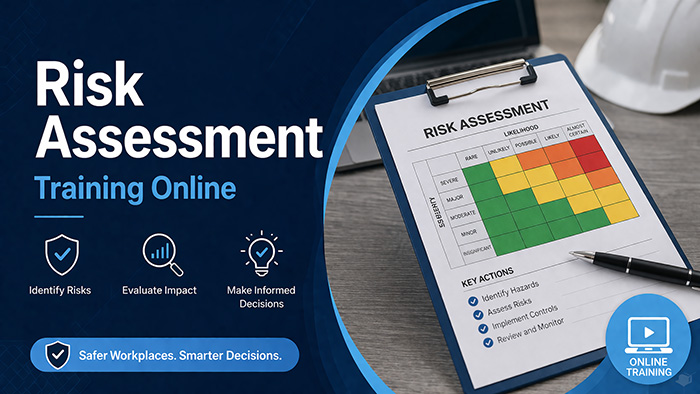
A clear, practical understanding of how to carry out workplace risk assessments and control hazards effectively.
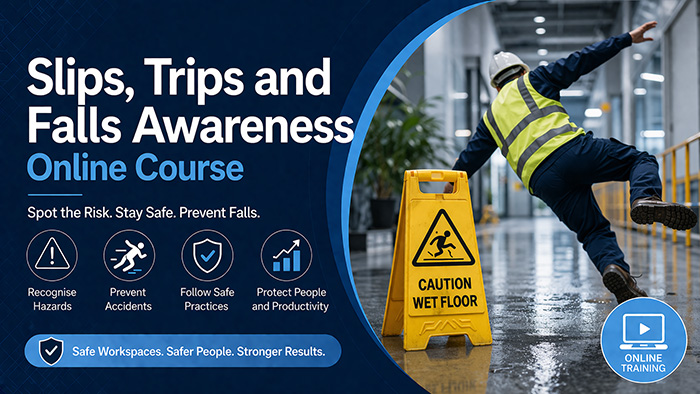
Awareness-level training on preventing slips, trips and falls — among the most common causes of workplace injury.
Instant access, learn at your own pace, and download your RoSPA accredited certificate the moment you pass — helping you use ladders safely and meet your legal duties under the Work at Height Regulations 2005.
Pick any mix of courses. Discounts apply automatically based on total seats.
Add 10 or more seats to unlock 10% off.