
RoSPA approved
Working at Height Course
Risk assessment, legislation and the safe use of access equipment under the Work at Height Regulations 2005.
£14.00

The Online Manual Handling Training Course is designed to help employees and employers understand how to carry out manual handling tasks safely and reduce the risk of injury in the workplace — covering risk assessment, the law and safe techniques for lifting, carrying, pushing and pulling.

The Online Manual Handling Training Course is designed to help employees and employers understand how to carry out manual handling tasks safely and reduce the risk of injury in the workplace. This course raises awareness of manual handling risks and teaches safe manual handling techniques to help prevent common workplace injuries, including back injuries and musculoskeletal disorders.
Suitable for UK workplaces where staff undertake manual handling operations as part of their daily tasks, this manual handling course covers risk assessment, legal duties, and practical techniques for lifting, carrying, pushing, and pulling loads safely. It supports compliance with the Manual Handling Operations Regulations 1992 and wider health and safety requirements.
The course is delivered fully online, allowing learners to complete training at their own pace. Upon successful completion, learners receive a digital Manual Handling Certificate, accredited by RoSPA and CPD, providing recognised evidence of manual handling training.
There are no formal entry requirements for this course and no prior manual handling training is required.
By the end of this manual handling training you'll understand:
This course walks you through real manual handling tasks — assessing the load, planning the lift, using the right technique and knowing when to use a mechanical aid — so you can move loads safely and protect your back, joints and muscles every day.
It’s all online and self-paced, with short, easy-to-follow modules you can complete on any device in around 90 minutes.

Eleven structured modules take you from the basics of manual handling through to safe, practical lifting technique — finishing with a final assessment. You can work through them at your own pace and revisit any topic as often as you need.
This opening module sets out what manual handling means in practice — any lifting, lowering, carrying, pushing or pulling of a load by hand or bodily force. You will learn why the topic matters across almost every workplace, from offices and warehouses to care settings, and how poor handling contributes to musculoskeletal injuries. It builds the foundation for the practical techniques covered later in the course.
Here you explore the everyday tasks and environments where manual handling risks arise, from repetitive lifting to awkward postures and confined spaces. The module examines how the load, the task, the working environment and individual capability combine to create hazards. Recognising these risk factors early helps you and your colleagues prevent accidents before they happen.
This module looks at the injuries that unsafe handling can cause, including back pain, sprains, strains and longer-term musculoskeletal disorders. You will understand how these injuries develop, which parts of the body are most vulnerable, and the impact they have on workers and employers. Knowing the consequences reinforces why safe technique and good planning are so important.
You will work through the key UK legislation governing manual handling, including the Manual Handling Operations Regulations 1992 and duties under the Health and Safety at Work etc. Act 1974. The module explains what employers and employees must do to comply, from avoiding hazardous handling where possible to assessing and reducing risk. This gives you a clear picture of your legal obligations at work.
This module guides you through the risk assessment process using the established TILE approach — Task, Individual, Load and Environment. You will learn how to identify hazards, judge the level of risk and record your findings in a practical, structured way. Carrying out a proper assessment is central to meeting your duties and keeping handling tasks safe.
Following the regulatory hierarchy, this module focuses first on avoiding hazardous handling altogether, then on reducing the risk where it cannot be eliminated. You will consider how to redesign tasks, reorganise workflows and rethink how loads are stored and moved. These control measures help cut the chance of injury at its source rather than relying on technique alone.
This module introduces the equipment that can take the strain out of moving loads, such as trolleys, sack trucks, hoists, conveyors and lifting aids. You will learn how to select the right aid for the task, use it safely and carry out basic checks before use. Making good use of mechanical assistance is one of the most effective ways to reduce manual handling risk.
Here you learn the core principles of safe lifting, including planning the lift, adopting a stable base, keeping the load close and using the legs rather than the back. The module breaks down good posture and body mechanics step by step so the technique becomes second nature. Applying these fundamentals protects your spine and reduces the likelihood of injury.
Building on the core technique, this module applies safe principles to a range of common movements — lifting and lowering, carrying loads over distance, and pushing or pulling wheeled equipment. You will learn how to handle different load types and adjust your approach to the situation. Practical, task-specific guidance helps you stay safe across the varied jobs you face day to day.
This module contrasts safe, effective handling with the poor practices that lead to injury, helping you recognise the difference in real situations. You will review common mistakes and learn how to correct them, reinforcing good habits and a positive safety culture. Spotting poor technique in yourself and others is a key part of keeping the workplace safe.
The course concludes with a multiple-choice final assessment that checks your understanding of the principles and techniques covered throughout. Passing confirms you can apply safe manual handling knowledge in the workplace and unlocks your certificate. Retakes are included, so you can revisit the material and try again until you succeed.

To earn your Manual Handling Certificate, you'll complete a multiple-choice final assessment with a 75% pass mark. If you're not successful first time, retakes are included at no extra cost — you can resit as many times as you need until you pass.
As soon as you pass, your instant digital Manual Handling Certificate is issued immediately. It confirms your RoSPA and CPD certification and can be presented to employers and enforcement authorities as recognised evidence of manual handling training. The certificate has no expiry date, although refresher training is recommended periodically to keep techniques safe and up to date.
This manual handling course is suitable for anyone who lifts, carries, pushes or pulls loads as part of their work, including:
It's relevant across all UK industries and there are no entry requirements — no prior manual handling training is needed.
Looking to cover wider workplace risks too? Pair this with our Risk Assessment Training or Slips, Trips & Falls Awareness — mix and match any courses in one order and your bulk discount applies across the whole basket.
Buy, assign and manage manual handling training across your whole team — all from one place.
Discounts apply automatically at checkout and scale with your order. Mix and match different courses across your team — the discount applies to your whole basket.
Buy the licences you need now and assign them to staff whenever it suits — add team members by email and they'll get their own login.
A simple manager dashboard shows who has started, who's in progress and who has passed — so you can follow up before an inspection.
Download every team member's certificate from one account and export a training record for inspections or internal audits.
Pay by card for instant access, or get in touch about invoicing and purchase orders for larger team orders.
Our team is on hand to help with enrolments, dashboards and invoicing. Call 0800 852 7729.
 .Bulk pricing & team discounts
The more licences you buy, the more you save — and discounts apply across your whole order, including mixed courses.
Discounts are applied automatically at checkout based on your total quantity.
No — your course credits never expire until they're used. Buy now and assign them to staff whenever you're ready.
It teaches employees how to carry out manual handling tasks safely and reduce the risk of injury.
Yes. UK law requires employers to provide appropriate training for employees involved in manual handling operations.
Yes. This course is fully RoSPA certified.
Yes. The course is fully online and can be completed at your own pace.
Yes. You will receive an instant digital Manual Handling Certificate upon completion.
No. The certificate does not have an expiry date. However, refresher training is recommended periodically to ensure techniques remain safe and up to date.
Most learners complete the course in around 90 minutes, working at their own pace across 11 short modules. The final assessment has a 75% pass mark, and retakes are included at no extra cost until you pass.
You can learn on any device with a modern web browser — desktop, laptop, tablet or smartphone. You can start on one device and pick up where you left off on another.
Yes. Buy multiple licences and you'll get a management dashboard to assign courses to staff by email, track progress and download every certificate. Bulk discounts apply automatically: 10% off 10+, 20% off 50+, 30% off 100+ and 40% off 500+, and you can mix and match any courses in one order.
It suits any employee who lifts, carries, pushes or pulls loads — including warehouse, retail and logistics staff, delivery drivers, construction and maintenance workers, and office staff. It is ideal for both new starters and refresher training, with no prior knowledge required.
Other accredited Health & Safety courses that pair well with manual handling training.
Risk assessment, legislation and the safe use of access equipment under the Work at Height Regulations 2005.
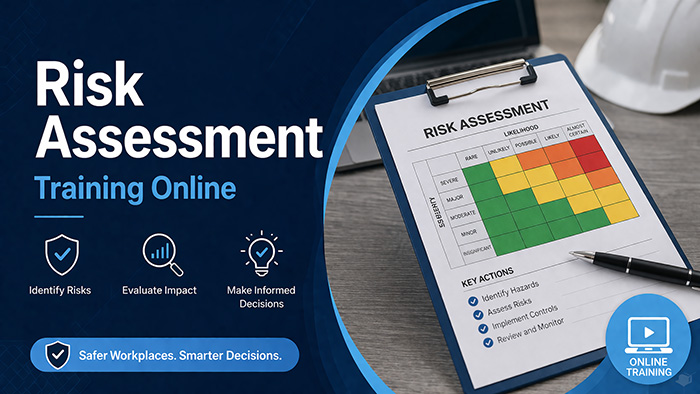
A clear, practical understanding of how to carry out and record workplace risk assessments.
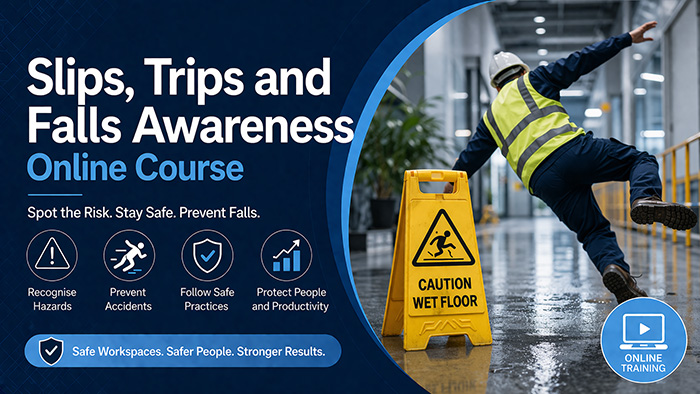
Recognise and control the most common cause of workplace injuries across every UK setting.
Instant access, learn at your own pace, and download your RoSPA accredited certificate the moment you pass.
Pick any mix of courses. Discounts apply automatically based on total seats.
Add 10 or more seats to unlock 10% off.