.svg)


%201.png)

%201.svg)


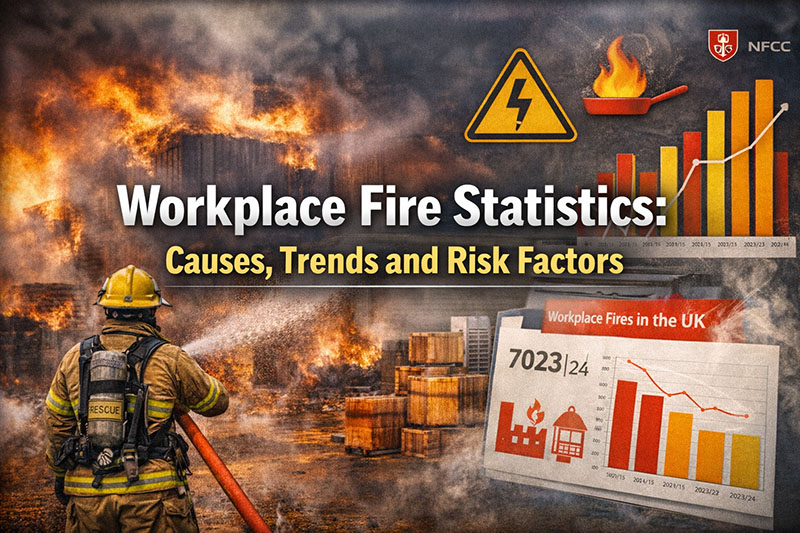
This guide brings together the latest available data on fires in UK workplaces to highlight where risks are highest, how trends have changed over time, and what businesses can do to reduce fire-related incidents. All figures are drawn from official Fire and Rescue Services data, including Home Office fire incident datasets, and reflect the most up-to-date information available at the time of publication.
Key workplace fire statistics
- 6,665 workplace fires were recorded in the UK in 2024/25
- Workplace fires have fallen by around 29% over the past decade
- Electrical faults remain the leading identifiable cause of workplace fires
- Industrial premises account for around one in four workplace fires
- Industrial, food and drink, and retail premises together account for over 60% of incidents
Workplace fires in the UK
Despite a clear long-term decline, workplace fires continue to pose a serious risk to UK businesses. In 2024/25, Fire and Rescue Services attended 6,665 fires in non-residential workplace buildings across the UK.
Compared with figures from ten years earlier, this represents a reduction of almost three-tenths, reflecting improvements in building standards, fire detection systems, and regulatory compliance. However, thousands of businesses are still affected by fire every year, often resulting in operational disruption, financial losses, and potential risk to staff and customers.
Workplace fires over the past 10 years
The sharpest fall occurred in 2020/21, when workplace fires dropped significantly during the pandemic. While incidents rose again as restrictions eased, the overall downward trend has since resumed.
Causes of workplace fires
Electrical distribution and electrical equipment faults remain the most common identifiable cause of workplace fires, accounting for around 18% of incidents. This category includes fires involving wiring, fuse boards, distribution boards, and fixed electrical installations.
Electrical fires are commonly linked to:
- Damaged or ageing wiring
- Overloaded circuits
- Improper use of extension leads
- Poor inspection and maintenance regimes
Smoking-related materials and domestic-style appliances are also significant contributors, particularly in workplaces with outdoor smoking areas, break spaces, or long operating hours. A substantial proportion of incidents continue to be recorded under unspecified or other causes, highlighting the difficulty of identifying ignition sources once fires have spread.
Leading causes of workplace fires
Businesses most at risk of fire
Fire risk is not evenly distributed across sectors. Certain types of workplace account for a disproportionate share of incidents due to their activities, equipment, and operating conditions.
1. Industrial premises
Industrial buildings remain the highest-risk category, accounting for around 25% of all workplace fires. This includes:
- Manufacturing facilities
- Warehouses and storage units
- Vehicle repair workshops
- Industrial processing sites
High electrical loads, flammable materials, hot work activities, and complex machinery all increase the likelihood of fire.
2. Food and drink premises
Restaurants, cafés, commercial kitchens, and takeaway outlets account for around 19% of workplace fires. Regular use of cooking appliances, grease build-up, and extended opening hours contribute to elevated risk levels.
3. Retail premises
Retail premises represent around 18% of workplace fires. Electrical installations, combustible stock, back-of-house storage areas, and long trading hours all play a role.
Workplace fires by building type (2024/25)
Reducing fire risk in the workplace
UK businesses can significantly reduce fire risk by maintaining robust fire safety management systems, including:
- Carrying out regular fire risk assessments
- Inspecting and maintaining electrical systems and fixed wiring
- Installing and maintaining fire detection and alarm systems
- Providing suitable fire extinguishers
- Developing clear evacuation procedures and practising drills
- Delivering regular fire safety training to employees
- Ensuring good housekeeping in storage areas, plant rooms, and voids
Proactive fire safety management not only protects people but also reduces the risk of business interruption, legal action, and long-term financial damage.
Data sources
- GOV.UK – Workplace fire safety responsibilities - https://www.gov.uk/workplace-fire-safety-your-responsibilities
- Home Office fire incident statistics (FIRE0301, FIRE0602)
- National Fire Chiefs Council (NFCC) - https://nfcc.org.uk/